

CONVERSION // INTAKE & RESPONSE SYSTEMS
Turn every serious inquiry into an owned opportunity.
A form can collect a name, date and guest count. That does not mean the opportunity has been captured.
Conversion begins when the request is acknowledged, reaches the right person and continues toward a clear commercial decision.
Private dining, catering, large-party and buyout inquiries often arrive while the team is working the floor. The system must keep the opportunity moving without asking automation to make promises that belong to a human operator.
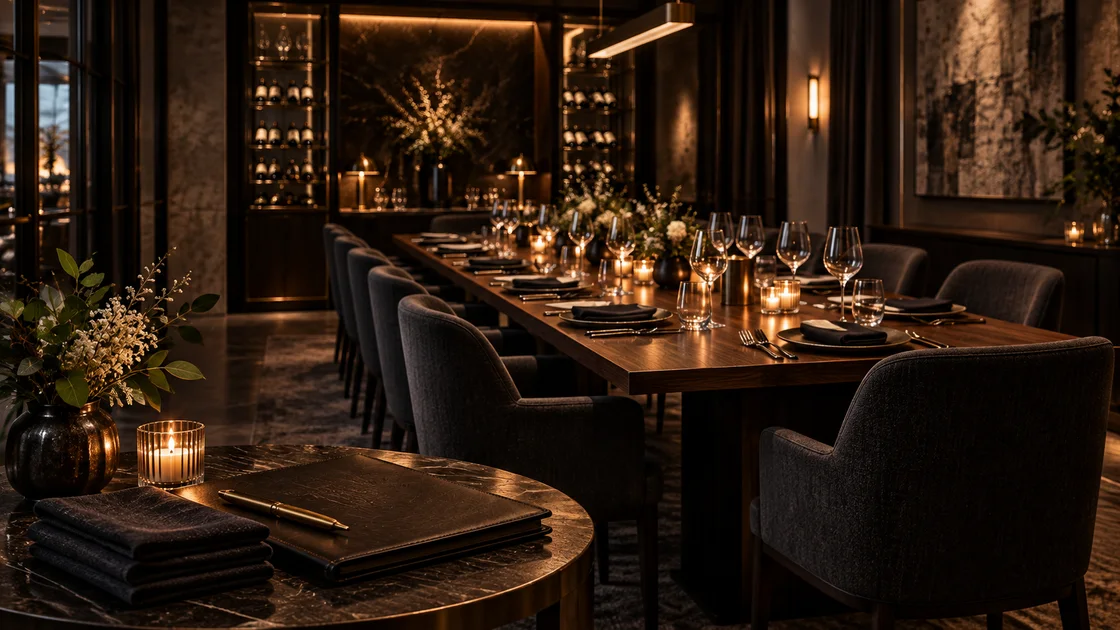
The form is not where the process ends.
After a guest presses send, the request enters the restaurant’s process. In many operations, that is where it starts to drift:
- The inquiry lands in a shared inbox.
- Several people can see it, but nobody clearly owns it.
- The guest receives a generic acknowledgment.
- The manager is working service and cannot respond right away.
- Details are re-entered into emails, spreadsheets or reservation notes.
- Follow-up depends on someone remembering.
- Nobody can say exactly where the opportunity stalled.
The problem is not always insufficient demand. The problem is that valuable demand enters a process without ownership or momentum.
Ask only for what moves the inquiry forward.
A right-sized intake collects the minimum information needed for the next action. A guest should be able to finish it on a phone without feeling interrogated.
The essentials
- Inquiry type
- Preferred date
- Approximate guest count
- Contact information
- Flexibility
- Initial context
Different requests, different details
- Large-party reservation
- Private dining
- Catering
- Partial buyout
- Full buyout
Additional questions appear only when the request calls for them. Each type of inquiry needs different details—and each should reach the person equipped to answer it.
Capture. Assign. Respond. Advance.
Once the request is in, the work becomes a sequence. Each step has a purpose and an owner.
Capture
Collect usable information without forcing the guest through an excessive questionnaire.
Acknowledge
Confirm that the request has been received and explain what happens next.
Assign
Classify the request, route it, and place it with one clearly responsible person or role.
Escalate
Create a fallback when the assigned person is unavailable or the response window is missed.
Advance
A person responds and moves the conversation toward qualification, a proposal or next action, confirmation and deposit.
Hand off
Once the opportunity becomes confirmed business, pass the agreed information into the restaurant’s execution process.
Automate the repetition. Keep judgment with the operator.
Automation is useful where the work repeats. It should not decide what the restaurant can promise.
Automation can support
- Acknowledgment
- Classification
- Routing
- Assignment
- Reminders
- Status changes
- Approved response drafts
- Basic measurement
Your team keeps authority over
- Availability
- Pricing
- Minimum spends
- Menu customization
- Contract terms
- Exceptions
- Final commitments
- Guest relationships
The value is operational continuity and accountability: each serious inquiry has an owner, a next step and a record of where it stands.
Use the system the operation can sustain.
There is no single right answer. The right system depends on inquiry volume, event complexity and the team that has to run it.
Improve what already exists
Appropriate when inquiry volume is limited and the restaurant mainly needs:
- Clearer intake
- Better acknowledgment
- Explicit ownership
- A documented follow-up process
Configure a lightweight conversion layer
Appropriate when private-event or catering opportunity is meaningful but a complete event-management platform is not required. It can include:
- Conditional intake
- Shared ownership
- A lightweight pipeline
- Response expectations
- Escalation
- Basic conversion measurement
Recommend a dedicated platform
Appropriate when confirmed-event volume creates complexity involving:
- Multiple spaces
- BEO production
- Room or inventory management
- Deposits and contracts at scale
- Kitchen coordination
- Multi-location event teams
- Execution failures after the sale
Technology selection follows the operational requirements, not a fixed stack. When an established event platform is the right decision, that is what I will recommend.
Advisory that continues through implementation.
The recommendation does not end with a report. The same responsibility carries through to a process your team is running.
Diagnose
Identify where valuable inquiries enter, stall, disappear or become operationally fragmented.
Design
Define the intake, ownership, response, escalation and handoff rules.
Configure
Use the restaurant’s existing systems where possible and introduce only the technology the operation can support.
Train
Prepare the people responsible for receiving, advancing and handing off opportunities.
Measure
Track whether inquiries are being acknowledged, owned, advanced and converted into confirmed business.
Designed for the gap between a contact form and a full event platform.
This work tends to fit when several of these conditions are true:
- An independent restaurant or small restaurant group
- Meaningful private dining, catering or buyout activity
- No dedicated full-time event-sales team
- Managers answering inquiries while also running service
- Leads spread across inboxes, phone messages or reservation notes
- Inconsistent response ownership
- A need for more structure without unnecessary enterprise complexity
Not every restaurant needs this service. A basic contact form may be enough for an operation that receives very few special inquiries, and a dedicated event platform may be the right choice for a restaurant already managing complex event execution.
RIGHT-SIZED CONVERSION
Install the response system your restaurant actually needs.
Not every restaurant needs a full private-events platform. Some need a clearer intake. Some need ownership, routing and follow-up. Others have reached the point where a dedicated system is the responsible next step.
I identify where valuable inquiries are being lost, design the operating response, configure the technology that fits, and prepare the team to run it.
The objective is not another piece of software. It is a reliable path from guest interest to confirmed business.
Seven short questions about your operation, then a review before you send.